Home » NewPages Blog » Page 259

NewPages Blog

At the NewPages Blog readers and writers can catch up with their favorite literary and alternative magazines, independent and university presses, creative writing programs, and writing and literary events. Find new books, new issue announcements, contest winners, and so much more!

Writer Exchange :: China

In 2009, the International Writing Program (IWP), in cooperation with the Chinese Writers’ Association, is commencing a pilot exchange project, the Life of Discovery (LOD), between writers and artists from the United States and from the minority ethnic communities in the western regions of the People’s Republic of China. Five American and five Chinese writers and artists, all aged 25-40, will be invited to join two senior artists, one from each country, in a series of collaborative, bilingual projects, conducted first in Western China (over the course of sixteen days in mid-May, 2009) and continued and elaborated upon in the US (five to seven days at the end of September, 2009).

For more details on the exchange, the dates and proposed locations, visit University of Iowa’s IWP website.

Back on the Spindle

Spindle, launched just over a year ago, has gone nine months without an update, but has just recently returned with some “fresh new NYC-flavored literary content”: poetry from the likes of Amanda Halkiotis, Lynn Patmalnee and Jon Sands, plus a new photo gallery from David King, and an inspiring (and timely!) essay from Peggy Landsman entitled “The Community Chorus”.

Horticulture Seeks Poetry

Horticulture, the oldest and most respected magazine for avid gardeners in North America, is pleased to announce the addition of poetry to its editorial features. Cave Canem fellow (and fellow gardener) Michelle Courtney Berry’s “What I Learned in the Garden” has been chosen as the debut poem, to appear in the April 2009 issue.

“For over 100 years, Horticulture has been dedicated to celebrating the passion of avid, influential gardeners, and there is an even longer history of poetry inspired by flowers and gardens — from William Blake to Louise Gl

Awards :: Anderbo

2008 Anderbo Poetry Prize

Winner
Kathleen M. Kelley for her poems “The Waiting Room” & “My Real Mother”
She receives: $500 cash
Publication on anderbo.com

2008 Anderbo Poetry Prize Poems of Distinction
“Fugitive Memory” by Penelope Scambly Schott
“Graal” by Carol Quinn
“What Your Life Did While You Were Away” by Leslie Vryenhoek

A New Writers’ Residency

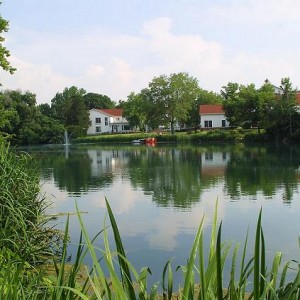
Writers in The Heartland is now taking applications for its inaugural season. Writers in the Heartland is a writing colony for creative writers in all genres. The colony is located in Gilman, Illinois, approximately 2 hours south of Chicago. It is located on a beautiful 30-acre wooded site with lakes and walking paths. A limited number of one-week residencies are available for September 18-25 and October 3-10. Lodging and food are included.

Applications must be received by April 15, 2009, to be considered. Decisions will be announced by July 1st.

LSUS to Host Black Literature Read-In

In honor of Black History Month LSUS announces the 2009 First Annual Black Literature Read-In, from 9:00 a.m. to 2:00 p.m. Monday, February 2, in the University Center Ballroom.

Students, faculty and community members will read aloud from selections of African American literature. Texts can include poetry, drama, speeches, music, novels, short stories and non-fiction essays. Personal text, prepared dramatic interpretations or selections at the event will be read. Featured dramatic performances will take place from 11:00 a.m. to 12:00 p.m.

Already Critiqued :: Inaugural Poem

Carol Rumens, witer for The Guardian.uk Books Blog section, has wasted no time in critiquing Elizabeth Alexander‘s inaugual poem, with the headline including her first criticims: “praise poem was way too prosy.” She goes on to give a clear assessment of the work in the tradition of praise poems, but also in the context of the event itself. Her overall view: good, but not as good as it could have been.

So, We’re Not Alone

A recent article in the National Post calls its Candian readers to task for not being able to name six Candian authors. The headline reads: “Half of us can’t identify a Canadian writer. What can we do about it? The results of the poll were widely reported, but what do we do about the fact we don’t know our authors?” Following the release of the 2008 Canadian Books Readership Study, the response concerning Canadian writers that is most troubling to the industry: 46% of the 1,502 people polled last June could not name a single author when asked: “Please name some Canadian authors you have heard of.”

So, the U.S. may not be alone in its decline of book readership, although the article does mention that some respondents, while they knew the name of the books, didn’t know the name of the author. I guess it will be a worse state of concern when the response becomes, “What’s an author?”

On Southern Lit and Being “Special”

I came across this article: “Is the South Still Special?” after just having finished a review of The Southeast Review. In TSR, three interviews with four southern writers – Clive Barker, Hal Crowther and Lee Smith, Daniel Woodrell – each include their own views on this very question. It’s interesting to see this very “localized” perspective from D.G. Martin, specifically looking at North Carolina’s contributions and whether or not NC is still the “leader” in Southern literature.

Cannibal Books Offers 2009 Subscription

Cannibal Books is are currently selling subscriptions for $60, which includes all their 2009 publications:

Cannibal: Issue Four
Narwhal
Sent Forth to Die in a Happy City by Keith Newton
Pardon Me, Madam by Marvyn Petrucci
Someone Else’s Body by Claire Donato
Identity by Kevin Holden
Untitled Wave by Carolyn Guinzio
Transparency by Patrick Morrissey
Autumn it gestures. by Thomas Hummel
The Nightmare Filled You with Scary by Shane Jones
“Search Party” by Frank Stanford (broadside, 2008)
& any other books we release in 2009

Can Reading Dracula Make You a Better Person?

Victorian novels helped us evolve into better people, say psychologists

A “team of evolutionary psychologists, led by Joseph Carroll at the University of Missouri in St Louis, applied Darwin’s theory of evolution to literature by asking 500 academics to fill in questionnaires on characters from 201 classic Victorian novels. The respondents were asked to define characters as protagonists or antagonists, rate their personality traits, and comment on their emotional response to the characters.”

See a summary of the results on Guardian.co.uk

Narrative 30 Below Winners Online

N30B Contest Winners
All entrants in the Contest were between the ages of eighteen and thirty.

1st Place: Fisherman’s Daughter by Alita Putnam
2nd Place: Ready by Kara Levy
3rd Place: The West Oakland Project by Alison Yin

Narrative’s Third-Person Story Contest, with a First Prize of $3,000, a Second Prize of $1,500, a Third Prize of $750, and ten finalists receiving $100 each, is open to entries of fiction and nonfiction. Entry deadline: March 31

Take Action :: PEN Center’s Liu Xiaobo Arrested

Liu Xiaobo: On Writing and Freedom of Expression in China

On December 8, 2008, authorities arrested prominent PEN Member Dr. Liu Xiaobo after he co-authored Charter 08, a manifesto calling for greater freedoms and democracy in China. He is being held on suspicion of “inciting subversion of state power.” If convicted, Liu could be sentenced to a minimum of three years in prison.

Writer, dissident, and former president and current board member of the Independent Chinese PEN Center, Liu Xiaobo can be viewed on a PEN video talking about writing and freedom of expression in China.

Grrrl Zine Riot

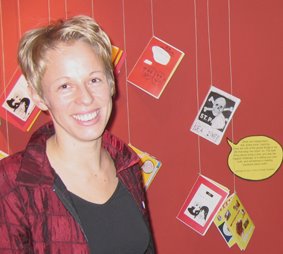
Austrian-born Elke Zobl has indeed created a “global feminist network taking back the media” with her site Grrrl Zine Network.

On the site, you can find “rebellious feminist zines: grrrl and lady zines, riot grrrl zines, transgender zines, zines by grrrls of color, lesbian/queer zines and many others!” The site also features interviews with zinesters from around the globe! I’ve never seen anything like this.

Zobl comments on how the site was started: “Five years ago, when I was looking for feminist zines on the Internet there was no comprehensive resource site available. So I decided to create one. That’s how GRRRL ZINE NETWORK, came into being. My overall goal for the web site is to share resources on grrrl zines in different languages, and to create connections between like-minded but often far-away feminist youth who read and produce zines. Currently the site is listing and linking around one thousand feminist-oriented zines and distros from more than thirty countries in twelve languages. The resource section provides information about feminist organizations, art, popular culture, and music projects. Another part compiles books, videos, journalistic and academic writing on grrrl zines. To exchange information and ideas, as well as to announce new issues or calls for submissions, I have also created a mailing list and message board. Both provide a forum for people interested in talking about zines, feminism and the global network!”

In addition to this work, Zobl has a deep commitment to feminist zine studies: “I am also doing research on alternative media (or citizens’ media), feminism and social change. I have written my dissertation on “The Global Grrrl Zine Network: A DIY Feminist Revolution for Social Change” (funded by the Austrian Academy of Science) (at the Institute for Theory, Practice and Mediation of Contemporary Art at the Academy of Fine Arts Vienna, Austria) as well as my master’s thesis on “Do-It-Yourself: Feminist Artistic Practice in Zines and Magazines.”

Great stuff!

Jobs :: Various

Assistant Professor in English (Creative Writing, Fiction/Non Fiction) Point Park University, Pittsburgh, PA. Karen McIntyre, Dean, School of Arts and Sciences.

Johnson State College full-time, tenure-track Assistant Professor of Writing and Literature to begin August 2009.

The University of Dubuque invites applications for a full-time, tenure-track position in the Department of English, beginning in August, 2009.

One-year appointment, beginning August 2009, for a creative writer who plans a career that involves college-level teaching, to teach three courses per semester, including Introduction to Creative Writing and an advanced course in the writer’s genre, as well as to assist with departmental writing activities. Mentorship for teaching and assistance in professional development provided. M.A., with a concentration in creative writing, M.F.A., or Ph.D. with creative dissertation, required. Teaching experience and literary magazine publications are essential. Competitive salary.
To apply, send letter of application, c.v., the names of three references, and a 5-10 page writing sample to Emerging Writer Lectureship, Department of English, Box 397, Gettysburg College, 300 N. Washington St., Gettysburg, PA 17325, postmarked by January 30, 2009. Electronic applications will not be accepted.

New Yorker Fiction 2008 in Review

Bravely done, C. Max Magee on The Millions blog has created a kind of annotated bibliography of the 2008 New Yorker fiction. The overarching theme identified? Those that focus on a kind of “surburban malaise (born out of “The Swimmer” and “What We Talk about When We Talk about Love” among many others) and those that don’t.” Put that way, I’m tempted now to go back and read the very “New Yorker Fiction” I had long given up on as predictable and drab. Surburban malaise might be just what I needed to hear to appreciate it – some.

Literature Bailout?

Wall Street bailout, car industry bailout, porn bailout – ? Government support for analog to digital media (aka TV) conversion? Wait a minute – where the heck was the bailout for literary publications when we’ve been bemoaning for years the steady decline in reading in this nation, and then the recent postal rate hikes that hammered the smaller subscription publications, and how about the ongoing independent bookstore closings (and now chain bookstore closings), and layoffs in the publishing business, and…and…?

American Literary Review – Spring 2008

David Wagoner’s “The Shape of My Life” got it right: “Three or four beginnings, four / or five middles, and two or three / regrettable endings”(except for the endings being regrettable – they’re not). This issue is all about telling a good story, beginning, middle, and end. More than a dozen poets, four fiction writers, and three essayists demonstrate the power of narrative, the rich possibilities of an original first line, and the satisfying resolution of a clever ending. Continue reading “American Literary Review – Spring 2008”

The Broome Review – Spring 2008

Within six months of placing a small ad in Poets & Writers, the editors of The Broome Review received more than 1,000 submissions to consider for this inaugural issue. They selected the work of 28 poets, including poems by such prolific and well known poets as Stephen Dunn, Timothy Liu, Lawrence Raab, and Philip Dacey; five fiction writers; and three essayists. Continue reading “The Broome Review – Spring 2008”

failbetter.com – Fall/Winter 2008

There seems to be general agreement that one of the better online literary magazines today is failbetter.com. They get their name from the short poem by Samuel Beckett: “Ever tried. / Ever failed. / No matter. / Try again. / Fail again. / Fail better.” – certainly a philosophy we could all fruitfully adopt. I am particularly impressed with the layout of this journal, where everything is easily accessible from the home page. The latest postings are found at the top, and scrolling down allows one to sample recent fiction, poetry, visuals, and interviews in a descending chronological order. The editors also appear to be rather selective in accepting new work: only six short stories are presented on the site from July 15 to November 4. Continue reading “failbetter.com – Fall/Winter 2008”

Harpur Palate – Summer 2008

The fiction and poetry in this issue of Harpur Palate seems focused on examining the familiar through an exotic lens, and vice versa. In “Squander,” Jenny Hanning does interesting work with her reverently Kafka-esque premise. Katherine, a junior high English teacher and mother, wakes up as the family cat after a fatal car accident. Hanning makes good use of the material. She allows the playfully named Katherine to truly be a feline (she gifts her former husband with half-digested animals), and balances this with observations provided by her residual human perception. Continue reading “Harpur Palate – Summer 2008”

Hobart – 2008

Hobart # 9 takes us back to our youth when video games were black and white, hookers were a few keystrokes away, playground ballgrabbing was cause for nasty nicknames, and mothers left fathers. The stories in this collection are as addictive as the games their characters play – pool, Scrabble, chess, poker, Jenga, blackjack, and Magic: The Gathering. Continue reading “Hobart – 2008”

The Massachusetts Review – 2008

I like the juxtapositions in this issue of MR. On the left hand side of the page is Karen Kevorkian’s poem, “Crowded Rooms,” with lines as lyrically wrought as “the white coned / datura whose tissue cup / I lifted and there / it would be rankly sweet / in a starving time,” and on the facing page Fancine Witte’s sudden fiction, “The Way the Vase Got Broken”: “Was the cat. First, he did his little purr thing, followed by his sinewy arch thing. This was all topped off by his jump thing and then that, was just that.” Continue reading “The Massachusetts Review – 2008”

Mississippi Review – Fall 2008

Anyone interested in the present state of the literary journal, both print and online, should definitely consult the latest issue of the Mississippi Review. In the Introduction, the editors announce their celebration of the 100th anniversary of the contemporary literary magazine, and say, “We devote this issue to an investigation of what the literary magazine has become and where it may be headed.” There follows a cornucopia of useful information. Continue reading “Mississippi Review – Fall 2008”

New Madrid – Summer 2008

The official journal of the low-residency M.F.A. program at Murray State University, New Madrid “takes its name from the New Madrid seismic zone, which falls within the central Mississippi Valley and extends through western Kentucky.” Earthquakes within this region have caused the river to change course and after-effects have been felt as far away as New England. The quiet, honest intensity of the work in this issue is less explosive than a violent weather event to be sure, but powerful and lasting nonetheless. This issue includes the work of sixteen poets, including a special feature on “Emerging Poets,” four stories, an essay, and a couple of reviews. The work is steady, sturdy, and precise, careful work that takes itself seriously and encourages thoughtfulness and deliberate, attentive reading. Continue reading “New Madrid – Summer 2008”

The New Quarterly – Fall 2008

Published at St. Jerome’s University in Waterloo, Ontario, The New Quarterly is a handsome journal, obviously produced with great care, respect for the relationship between good reading and good design (short columns! white space!), and an appealing shape (think Brick or Tin House, but less bulky). I spent a long time appreciating the magazine’s physical appeal before I even began to take in the exceedingly good contents. Editor Kim Jerrigan tells us this issue’s theme is “Assorted Pedestrians,” a line from one of the stories featured in the issue, a theme borne out by intriguing photos of “human subjects” from Jonathon Bowman on the cover and title page. Continue reading “The New Quarterly – Fall 2008”

The Reader – Autumn 2008

How exciting to come across something new! Well, after 31 issues, this dynamic little magazine isn’t new, but I confess I had never seen it before – it’s not always easy to find British publications in US bookstores. This terrifically satisfying journal comes from Liverpool (with contributors this issue from Belfast, Liverpool, Australia, Oxford, and Lancaster). “New writing/book talk/news and reviews” is how The Reader accurately characterizes itself. Continue reading “The Reader – Autumn 2008”

The Saint Ann’s Review – Number 8

The cover of this issue is a delightful reproduction of a painting (oil on wood) by Jayne Holsinger whose closely examined human subjects share the vivid spirit and astute observation of much of the writing in this issue of The Saint Ann’s Review. Holsinger’s paintings are so finely etched and so sharply defined, it’s hard to believe they are created in oils. The work of 13 poets, 10 fiction writers, two essayists, an “e-interview,” several reviews, and strong artwork by three other artists match Holsinger’s gift for original and memorable image making. Continue reading “The Saint Ann’s Review – Number 8”

Slipstream – 2008

This issue of Slipstream includes the work of four-dozen poets, many of whose bios (though admittedly not all) are among the quirkiest you’ll find. Jane Adam of Buffalo, NY, “is more liquid than solid and leaves behind the hyaline purity to melt under streetlamps.” Jon Boiservert of Corvallis, OR, “throws up a lot.” J. Blake Gordon of Evanston, IL, “sleeps soundly, thinks about music, prepares simple meals, and watches a little television.” Toni Thomas of Milwaukie, OR, lives with “two energetic children.” Continue reading “Slipstream – 2008”

The Southeast Review – 2008

The Southeast Review is a true literary variety journal, with strengths of selection across all genres. The fiction is dominated by strong character stories and relationship observations, not so much on place. Even Kevin C. Stewart’s “Baton Rouge Parish” is less about NOLA and more about a couple’s relationship, which heats up when unsolved murders are splashed across the media. “The Rooftop” by Sarah Faulkner turns the coming-of-age theme on its head with this story of three sisters attempting to out-sex one another. It’s insightful and so real it almost hurts to keep reading. “Fourteen Carousels” by Fulbright Jones and “The Travel Writer” by Joey R. Poole, the other fiction in this collection, are similar in that they are gutsy, human, and at times hurt our reality check centers. Continue reading “The Southeast Review – 2008”

THEMA – Autumn 2008

The editor of Thema announces themes a year or more in advance. So, when Virginia Howard chose “When Things Get Back to Normal” thinking of her house and her life in Louisiana in the post-Katrina years, she could not possibly have known how much many more of us would be longing for “normal” in Autumn 2008. “For us, things will never get back to normal. We are trying to forge new versions of normal,” she writes in her introductory notes. Continue reading “THEMA – Autumn 2008”

Writer Advice :: Fellowships

From the blog Growing Great Writers from the Ground Up comes this unselfish advice for writers looking for new outlets and support resources:

Don’t Discount Yourself
Most of us writers come from humble backgrounds, which consist, more or less, of some training and a whole lot of heart. But in order for us to excel, we have to use the latter to increase — exponentially — the former. One way to train harder and smarter is to aggressively pursue fellowships.

What often stops us, however, is that humble background, which I call the Lowly Worm Complex. If you, too, suffer from I’m probably not good enough, get over it and start applying for the numerous creative writing fellowships.

The post goes on to look at why you should apply and some fellowship resources. A very generous post considering the competitive nature of fellowships. Proof positive that we are in this together and can look out for “our own.”

Interview :: Rachel Kushner

A Brief Interim of Sheer Possibility a conversation with Rachel Kushner on Littoral.

Rachel Kushner writes frequently for Artforum and coedits the literary, philosophy, and art journal Soft Targets, whose focus is political inquiry, poetry, and literature-in-translation. Her debut novel, Telex From Cuba, was nominated for the 2008 National Book Award.

In this interview, she speaks extensively about her connections with and political perceptions of Cuba, the focus of her novel, which takes place in Oriente Province and Havana, Cuba, during the 1950s.

Office Hell? Barrelhouse Wants You to Write About It

Always fresh, every time I visit the Barrelhouse website, I can’t help but laugh out loud. (With them, not at them – or at least I’d like to think so.) Their latest: “Barrelhouse Invitational: Office Life Edition.”

Dave Housley, “One Fifth of the Barrelhouse Editorial Squadronand” writes: “we’re looking for fiction, poetry, nonfiction, whatever, about that wonderful, soul-sucking, red stapler obsessing world of the office. No entry fee or anything, and winners will be published in the special Office Life section of Barrelhouse 8, which will come out in June.”

But for full entertainment effect, you have to visit the site and view the accompanying pdf memo, or my favorite,the PowerPoint presentation, with its effective use of bullets, arrows, and inclusion of a clear and concise mission statement, timeline, and measurable and desired outcomes. For anyone who has ever worked in an office environment or with admin hierarchies, you can’t help but cringe and laugh at the same time.

Children’s Lit :: Digital vs. Paper

A January 04, 2009 article by Alana Semuels in the Southern Oregon’s Mail Tribune, “Children’s literature has growth potential for e-books,” explores beyond the monetary gains by considering the learning losses:

[. . .] Kids are more likely than adults to interact with material on the Web, said Diane Naughton, vice president of marketing at HarperCollins Children’s Books. That publishing house has made 25,000 titles such as Lemony Snicket’s The Lump of Coal available digitally. Readers can browse them online or in some cases read them in full free.

There is some evidence that younger children learn less when they’re reading books in electronic form. Kathy Hirsh-Pasek, a professor of psychology at Temple University, studied parents who read digital books with their children and found that young children don’t get meaning from what they’re reading when they’re playing with gadgets and distracted by all the bells and whistles of technology.

“We have to be careful that electronic media is not a substitute for hands-on,” she said.

Kids who spend too much time staring at screens instead of imagining fanciful stories in their heads or playing with friends miss out on hands-on creative play, an essential part of a child’s development, said Susan Linn, a psychologist and associate director of the media center at Boston’s Judge Baker Children’s Center.

“It’s a problem because it means they’re not exploring the world themselves,” she said.

Publishers counter that digital books can attract kids to titles they otherwise might not see.

In any case, with the publishing industry weak, digital books are unlikely to go away because they are generating revenue [. . .]

Read the full article here.

ISO Writers Who Read Woolf

Anne E. Fernald, author of Virgina Woolf: Feminism and the Reader is looking to I want to feature some creative writers who will talk about Woolf’s influence, for good and ill, on their work, at the 19th Annual International Virginia Woolf Conference (June 4-7, 2009, Fordham University, Lincoln Center). She “especially wants those writers to not be all nice white women.” Click here for more information.

Community Outreach :: Cedar Tree

Cedar Tree, Inc., founded in 2004 by renowned, award-winning author Jimmy Santiago Baca, is a 501 (c)(3) non-profit organization dedicated to transforming lives through writing and literature. By providing writing workshops to people in deprived communities, prisons, detention centers, and schools for at-risk youth, Cedar Tree, Inc. helps participants gain self-knowledge and instills self-reliance as they explore issues such as race, culture, addiction, community, and responsibility. A series of Cedar Tree, Inc. documentaries chronicle workshop successes and bear witness to the transformative power of reading and writing. Cedar Tree, Inc. has developed a set of learning tools available to educators on request.

Cedar Tree publications include Clamor en Chine showcasing poetry written by inmates in the California State Youth Authority Prison in Chino, with 100% of the profits from sales going to fund future projects.

New Lit on the Block :: Naugatuck River Review

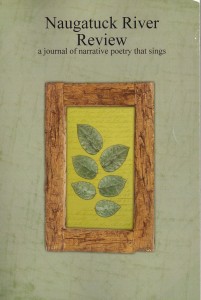
“This is a literary journal founded in order to publish and in doing so to honor good narrative poetry. Naugatuck River Review is dedicated to publishing narrative poetry in the tradition of great narrative poets such as Gerald Stern, Philip Levine or James Wright. We are open to many styles of poetry, looking for narrative that sings, which means the poem has a strong emotional core and the narrative is compressed. So, make us laugh and cry, make chills run down our spines. Knock us off our feet! We publish twice a year, Winter and Summer.”

Lori Desrosiers, MFA, is Managing Editor/Publisher, with other editors changing by issue. The Summer 2009 issue will include Associate Editor Dorinda Wegener and Guest Editors Kimberley Ann Rogers, Roberta Burnett, Oonagh Doherty, and George Layng.

The full list of contributors in the inagural issue and same sample pages of their work is available through Lulu, where you can also purchase the publication as a download or print copy.

The open submission period for the Summer 2009 issue is January 1st through March 1st.

Resource :: Artist Trust

Artist Trust is a not-for-profit organization dedicated to supporting Washington State artists working in all creative disciplines. Founded in 1987 by a group of arts patrons and artists who were concerned about the lack of support for individual artists.

Their site includes a great many resources for Washington State and beyond, including a searchable database of current and ongoing opportunities including Grants, Awards, Prizes, Scholarships, and Residency Programs; current Employment listings and Employment resources; current Studio Space & Housing listings and housing/space related resources; discipline-specific resources, as well as legal resources, health resources, and emergency assistance programs.